A focus group is used in usability and user research to collect the opinions of a group of users. It consists of a carefully selected group of participants (between 5 and 10), in a comfortable environment with a skilled moderator (facilitator) who uses a script to ask questions of the group, the answers are recorded and then analyzed and reported to enable further decision making.
Focus Groups
Your constantly-updated definition of Focus Groups and collection of videos and articles.
Be a conversation starter: Share this page and inspire others!
98 Shares
What are Focus Groups?
Learn More About Focus Groups
Make learning as easy as watching Netflix: Learn more about Focus Groups by taking the online IxDF Course User Research – Methods and Best Practices.
Why? Because design skills make you valuable. In any job. Any industry.
Get an Industry-Recognized IxDF Course Certificate
Increase your credibility, salary potential and job opportunities by showing credible evidence of your skills.
IxDF Course Certificates set the industry gold standard. Add them to your LinkedIn profile, resumé, and job applications.

Be in distinguished company, alongside industry leaders who train their teams with the IxDF and trust IxDF Course Certificates.

All Free IxDF Articles on Focus Groups


How to Conduct Focus Groups
Focus groups have long been a popular tool in market research and have become more popular in user research in the recent past too. They consist of a group of between 5 and 10 users who work with a moderator/facilitator/researcher. The moderator will pose questions from a script to the group. Their
- Social shares
- 926
- Published
Read Article
How to Conduct Focus Groups

Focus groups have long been a popular tool in market research and have become more popular in user research in the recent past too. They consist of a group of between 5 and 10 users who work with a moderator/facilitator/researcher. The moderator will pose questions from a script to the group. Their answers are recorded, sometimes by the moderator sometimes by an observer or observers, and then analyzed and reported on at the end of the process.
Preparing for a Focus Group
A focus group is, in essence, a large scale interview. Preparation for a focus group can be broken down into two key areas; recruitment of participants and creating the script for the moderator to use.
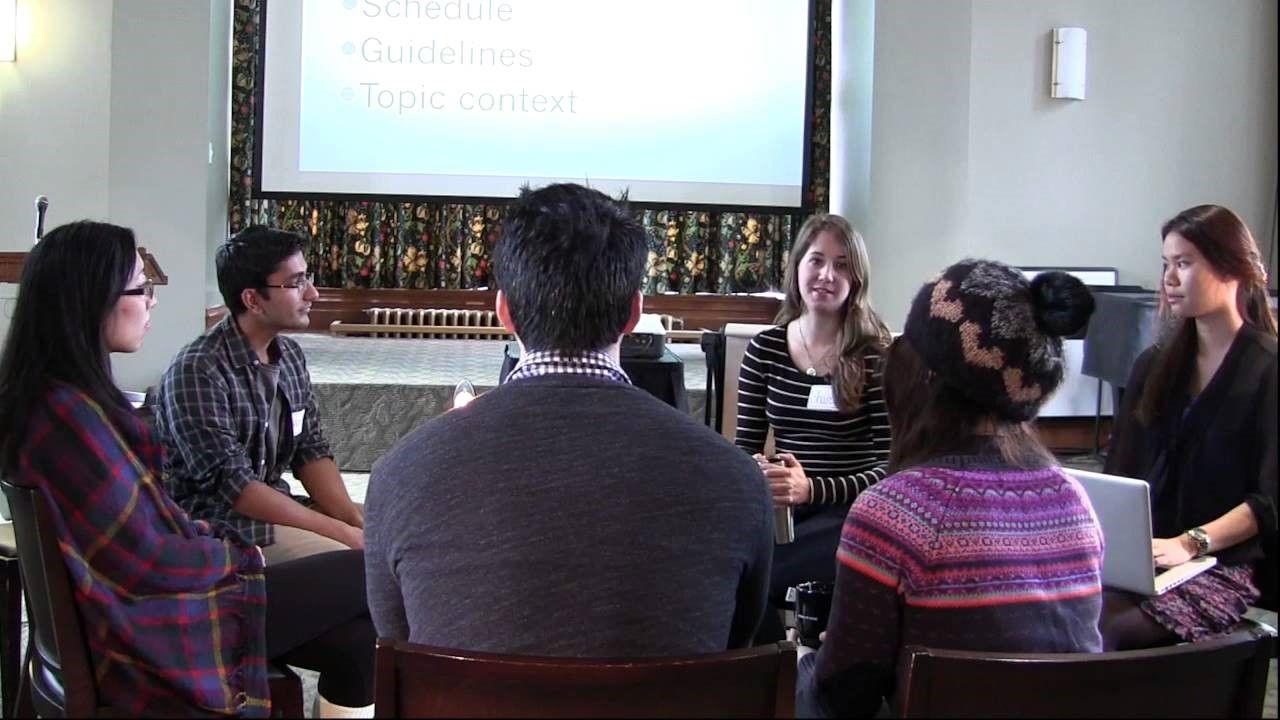
Author/Copyright holder: UBC LEAP. Copyright terms and license: Fair Use.
When it comes to recruiting participants all the usual methods of recruitment can be employed to deliver groups of between 5 and 10 participants. While, technically, it is possible to use larger groups in practice these are very hard to facilitate and it often leads to certain participants being left unheard while a small group of users dominates the proceedings. It is important to run more than one focus group to see if the question set is delivering consistent responses and, in many cases, to ensure a representative sample of users is being worked with.
In terms of scripting; it’s best to decide what the purpose of your focus group will be and then design questions to elicit responses that let you reach your objectives. In general, it is best to stay away from the use of leading questions. These are questions that make presumptions on behalf of the user or alternatively presuppose a given response. For example; “How much time do you spend on Twitter?” presumes that the users are using Twitter. A more general question about what social networks users use is likely to give more valuable data. Also a question like; “Everyone here likes Facebook, right?” presupposes that the users do like Facebook. A more neutral; “Tell me what your feelings are about Facebook?” is more likely to yield responses that show a range of feelings.
The environment for the focus group should also be prepared prior to the event taking place. It should be comfortable, ideally it should be laid out in a circle or horseshoe arrangement and have recording (video or tape) facilities to enable a further review of the proceedings once they have been completed.
Conducting a Focus Group
Conducting a focus group is simply a matter of asking the questions and recording the responses to those questions. However, there are some tips for facilitating high-quality focus groups:
The moderator should begin by explaining the purpose of the group and what is expected of the group
They should also address the question of how any data collected or personal data will be used and how it won’t be used
Name badges can help participants talk to each other and to the moderator
It can be a good idea to carry out an “ice breaker” exercise which frees people up to talk prior to engaging with scripted questions
The moderator should not be tasked with note taking. Ideally one or two observers will do this – they should be introduced to the group and their roles explained as part of the introduction
If video or audio recording is to be used – this should be explained in the introduction too
Refreshments should be made available and if the focus group sessions are lengthy – regular comfort breaks should be given
The moderator should try to establish a permissive environment in which everyone feels free to contribute
If a participant or participants begins to dominate proceedings – the moderator should gently encourage others to get involved and rein in the dominant participant(s)
The moderator should sum up important points at convenient moments and ensure that they have understood them
If the session goes for a long period of time – it’s important to vary the question and answer style script with other exercises (for example card sorting or prioritization exercises)
The moderator’s job is to progress the discussion and to facilitate it and not to participate in the discussion itself
The moderator may probe for understanding if they feel that someone is on the verge of an important insight
The moderator (with the observers) should lead a summary exercise at the end to summarize key themes, check for understanding and ask any questions that the observers feel would be useful
While question and answer is the most common format for short focus groups alternative activities may include (for variety):
Making choices from lists of alternatives
List making
Fill in the blank exercises
Fantasy/daydream exercises
Picture drawing
Role playing
Card sorting
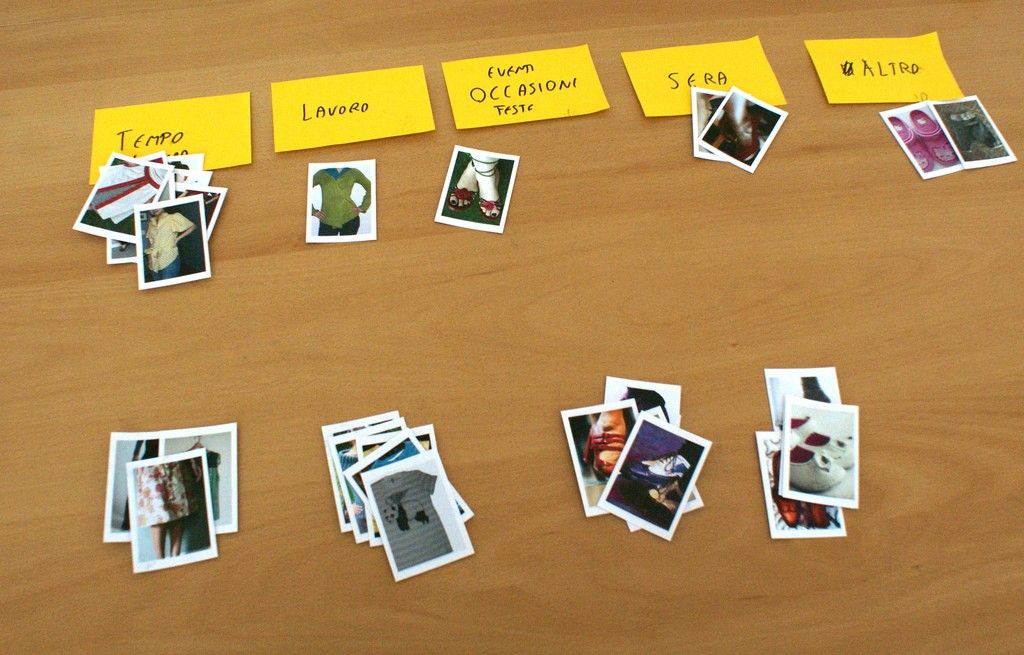
Author/Copyright holder: Luca Mascaro. Copyright terms and license: CC BY-SA 2.0
Note Taking Hints for Observers
While the moderator is free to make notes that help them drive the focus group’s activities forward and to keep within the time available for the group; the observers are tasked with making detailed notes about the actual content of the discussion.
These notes may include:
Interesting quotes. Try to capture who said it as well as what was said, it can help to use a participant’s initials for this. If you can’t get all the information down it’s common to use an ellipsis (…) to show that material is missing and needs to be retrieved from recordings.
Key points and themes from any exercise or question. Again try to capture who brought up these points with their initials. These form themes that should be shared by the observer with the group at the end of the session.
Follow up questions. If there’s something that the observer feels is significant and would like clarification on – they should record it and bring it up at a natural break in the group or at the end during the summary.
Ideas and insights “light bulb moments”. The observer may also record anything that occurs to them that they feel is important or useful – this does not have to be based on any particular observation but their own insight.
Anything else. It might be body language or the level of passion/anger etc. at any given time in the group. If something feels significant – it’s probably worth recording.
It can also be useful for an observer to complete a seating plan which shows where each person was sitting during the exercise.
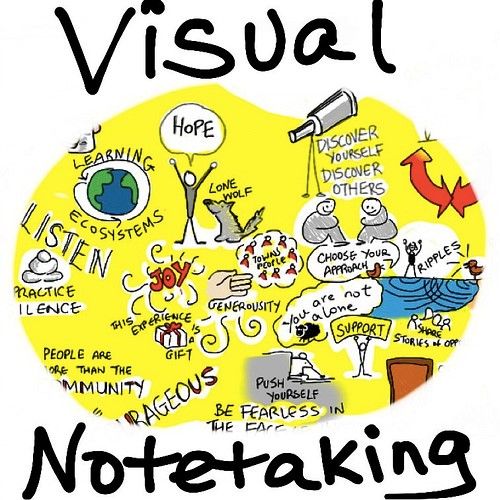
Author/Copyright holder: Wesley Fryer . Copyright terms and license: CC BY 2.0
Analysis
Individual focus groups are best analyzed immediately after they finish. It’s when things are freshest in the minds of the moderator and the observers. Other participants may be brought in to the analysis and videos/audios reviewed during that process.
If possible, a transcript of the audio may be useful to prepare for later analysis at the same time.
A simple report should be made of key findings after an individual focus group.
Once all your focus groups are complete – it’s time to do a meta-analysis. Key themes and ideas from all reports should be brought together. Compare and contrast exercises should be carried out between groups. Diagrams that help aid understanding of the data can be prepared. Then a report describing the overall findings should be written and issued to those who need it.
Things to consider when analyzing focus groups include:
Words. How are they used, what do they mean, are there similarities between participants or different groups?
Context. What happened to trigger a particular response?
Consistency. Was the participant consistent throughout or were they influenced by other group members?
Frequency of participation. Did someone dominate the discussion (it’s not always obvious even when the discussion is heavily moderated)? What comments were made most often? What comments occurred least? Were there any comments you expected but which didn’t occur?
Intensity. What was the intensity of feeling put into particular comments? Things that really matter tend to make people passionate, happy, angry, etc.
Specificity. How specific was someone’s comment? How much detail did someone give when probed about a response?
One final thing; it’s easy to get too focused on fine detail when analyzing the outputs from lots of focus groups. It can be useful to take a day’s break (or more) from the data once you’ve done the initial analysis and then come back and look for any “big ideas” which got bogged down in the detail.
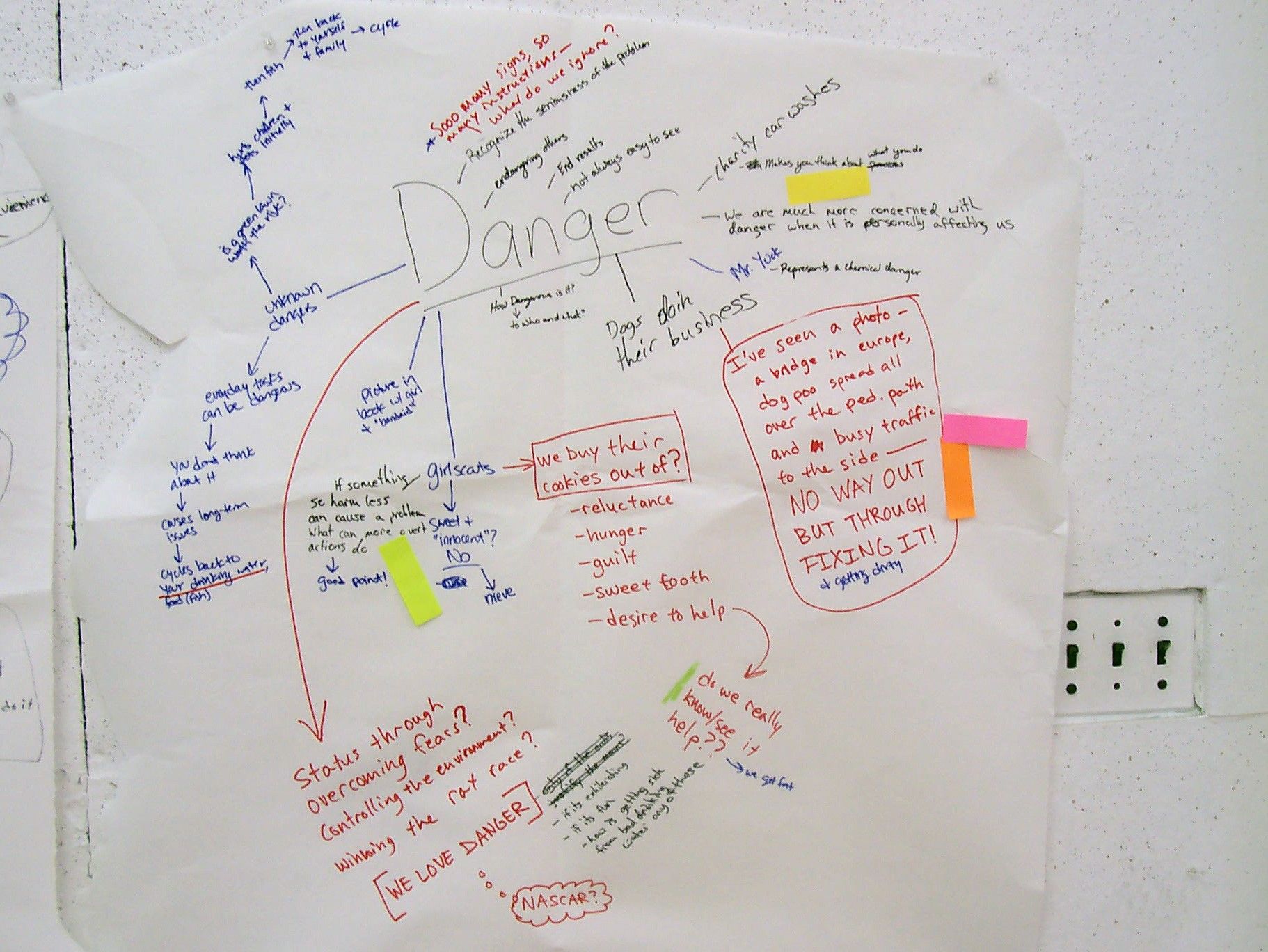
Author/Copyright holder: Parhamr. Copyright terms and license: CC BY-SA 3.0
The Take Away
Conducting focus groups is easy(ish) as long as you have a good moderator and observers. They are relatively expensive to conduct because of the number of participants involved and will generally be used to deal with major usability or user experience issues for large groups of users.
It’s always important to remember that people say they do things in one way but may actually do them in another. Focus groups are awesome for identifying issues for further examination and for soliciting large amounts of feedback but you may want to do a little more research on the results before treating them as gospel.
References
Lehigh University offers some additional guidelines here.
WikiHow offers an interesting pictorial guide to focus groups here.
Hero Image: Author/Copyright holder: Kate Ter Haar. Copyright terms and license: CC BY 2.0
Feel Stuck?
Want Better Job Options?
AI is replacing jobs everywhere, yet design jobs are booming with a projected 45% job growth. With design skills, you can create products and services people love. More love means more impact and greater salary potential.
At IxDF, we help you from your first course to your next job, all in one place.