Sympathetic Bonding and Why It’s Useful in Design

by Rikke Friis Dam • 9 min read

489 Shares

Sympathetic bonding occurs when we perceive someone else’s emotional reaction to be similar to our own experiences. As such, we feel sympathy for that person. It should be obvious that when we are sympathetic to people, we’re more likely to do the things they do and even—to some extent—do the things they want us to do. How do you create such sympathy online when you’re not in the room to be able to create such a bond? Let’s take a look and see how to weave this all-important dynamic into your designs.

What’s Your Favourite Story?

We’d like you to think about your favourite story. Why is it your favourite? Is it the way it makes you feel? Is it the pictures that spring up in your imagination? Is it because it makes you laugh or cry? Is it because of a particular character’s actions?
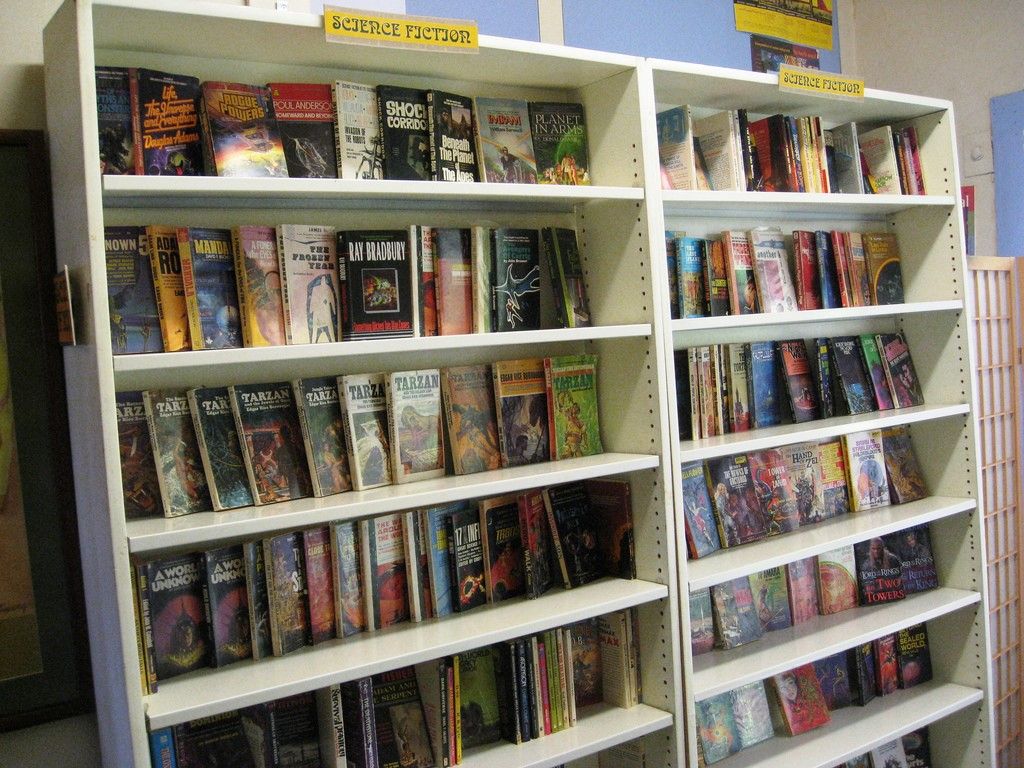
Author/Copyright holder: brewbooks. Copyright terms and licence: CC BY-SA 2.0

Books and stories go hand in hand. Almost all of our favourite stories originate in books.

There’s a lot going on in a story

Stories don’t just access a small part of our brains. The best stories can tap into all areas of our brains; even the old brain, which relies on providing instinctive decisions. If you’re not convinced that you can tap into the old brain, have you ever read a story so creepy that the hairs stood up on your neck or arms? That’s the old brain at work, processing your fear even though you know it’s only a story. Feeling scared feels pretty good, after all—and it’s certainly worth a trip to the library, an $8 paperback or a $5 Kindle download; it’s certainly an integral part of being human. Not for nothing was horror one of the first genres to crop up in cinema in the 1890s. Similarly, as children, what’s one chief component of the fairytales we hear or read? Horror—encompassing witches, wicked stepmothers and man-eating giants—in tales accesses our fear response from a very early age.

What goes on in your brain while you read a story?

  • Your brain processes the sound of the story (if it’s being told or read to you)
  • Your brain processes any visual aspects of the story (the letters on the page or any pictures that accompany it)
  • Your brain creates visual aspects of the story (the best stories let you believe that you’re there – that’s the brain creating an image of what’s going on)
  • Your brain creates an emotional response to the story (laughter, tears, anger, frustration – there’s no doubt at all that a great story gets you fully involved in the action)
  • Your brain may even send a few messages to the old brain (those hairs that stand up on your neck or the dilation of your pupils in shock at certain points of the story)

Author/Copyright holder: Ildar Sagdejev. Copyright terms and licence: CC BY-SA 3.0

When our brains encounter a scary story, they can trigger goose pimples and hair standing up on end.

Sympathy and Empathy

The absolute best stories enable you to feel what the lead character or characters feel. In 2004, German social neuroscientist Tania Singer conducted some research to prove this point. Firstly, she hooked some people up to MRI (Magnetic Resonance Imaging) equipment and looked at what happened when the body feels pain. She found that two areas of our brains are devoted to dealing with pain.

The first area deals with where the pain comes from and how intense that pain is. The second has a more subtle function; it decides how we experience that pain, or determines how unpleasant that pain is to us.

After discovering this, she took her experiment to another level, and this is where stories come back into the experiment. She asked some participants to read stories, during which the characters experienced some form of pain. She ran some MRI scans of their brains. What do you think happened?

It turns out that the first area of the brain—the one responsible for determining where our pain comes from and how intense it is—was dormant during the reading. After all, the person reading the story wasn’t in any pain, at least not in the direct sense of the term. So, the brain had no input to respond to.

However, the second area of the brain did respond. The volunteers were processing how bad the pain was, but they were not processing (i.e., experiencing) the pain itself.

It’s not quite the same as experiencing exactly what the character was going through in the story, but it is close enough. It also explains why we feel sympathy or empathy for people in stories. Our brains try to keep us as in touch as possible with the way the character feels. That’s important for social bonding in real-life situations, and it also works online.

Author/Copyright holder: Infrogmation. Copyright terms and licence: Public Domain.

Seeing people in pain or hearing about their pain can make us feel pain, too.

How Could I Use this in Design?

You can use storytelling to tell stories which evoke both sympathy and empathy in the reader (who will be your user or your customer or both). If those reading the story feel sympathy or empathy with the characters in that story, the readers will be more likely to react favourably to your website and your content, and to take action based on that sympathy/empathy.

In the same way as a “story” can refer to a real-life account (such as someone’s life story), it’s important that you realize that when we use the word “character” here, your characters don’t have to be works of fiction. “Character” can refer to you or your team members. Stories don’t have to be made up. They can relate what happens in the real world.

The Take Away

Numerous researchers have proven that stories can evoke both sympathy and empathy in the recipient of the story. Emotional responses to events that befall characters in stories get triggered in the reader in such a way that readers process the degree of the character’s suffering. This makes for a useful point in a design context, because you can tell stories to create a sympathetic bond between you and your users and customers. Your stories do not have to be fictional; you can base them on real-life situations, as long as they are something the audience can relate to. Here again, consider your target audience; fine-tuning this general human response to them will translate to far better chances of your making conversions from your usership.

References & Where to Learn More

Singer T, “Empathy for Pain Involves the Affective but not Sensory Components of the Brain”, Science 20 Feb 2004, Vol 303, 1157-1162

Hero Image: Author/Copyright holder: Ayacop. Copyright terms and licence: CC BY 2.5

Learn More in This Course:

AI for Designers

10 days
16 % booked
View Course

What You Should Read Next

  • Read full article
    The 5 Stages in the Design Thinking Process - Article hero image
    Interaction Design Foundation logo

    The 5 Stages in the Design Thinking Process

    Design thinking is a methodology that provides a solution-based approach to solving problems. It’s extremely useful when used to tackle complex problems that are ill-defined or unknown—because it serves to understand the human needs involved, reframe the problem in human-centric ways, create numerou

    Social shares
    2k
    Published
    Read Article
  • Read full article
    Empathy Map – Why and How to Use It - Article hero image
    Interaction Design Foundation logo

    Empathy Map – Why and How to Use It

    Here’s an interesting fact you may—or may not—know: users are more likely to choose, buy, and use products that meet their needs than products that just meet their wants. And an Empathy map will help you understand your user’s needs while you develop a deeper understanding of the persons you’re desi

    Social shares
    1.4k
    Published
    Read Article
  • Read full article
    Stage 1 in the Design Thinking Process: Empathise with Your Users - Article hero image
    Interaction Design Foundation logo

    Stage 1 in the Design Thinking Process: Empathise with Your Users

    Design Thinking cannot begin without a deeper understanding of the people you are designing for. In order to gain those insights, it is important for you as a design thinker to empathize with the people you’re designing for so that you can understand their needs, thoughts, emotions and motivations.

    Social shares
    1.3k
    Published
    Read Article
  • Read full article
    What Is Empathy and Why Is It So Important in Design Thinking? - Article hero image
    Interaction Design Foundation logo

    What Is Empathy and Why Is It So Important in Design Thinking?

    It’s fairly safe to assume you want your products to actually work, right? Then you need to start the design process with empathy — one of the most important elements in both design thinking and the wider area of human-centered design. But what is empathy exactly, and why is it so vital? Let’s take

    Social shares
    1.3k
    Published
    Read Article
  • Read full article
    10 Insightful Design Thinking Frameworks: A Quick Overview - Article hero image
    Interaction Design Foundation logo

    10 Insightful Design Thinking Frameworks: A Quick Overview

    If you’ve just started to embark on your journey into the field of design thinking, you may have noticed different frameworks cropping up here and there. This is nothing to worry about—it’s simply the result of different people’s perceptions of the design thinking process. To help you get your head

    Social shares
    1.2k
    Published
    Read Article
  • Read full article
    Test Your Prototypes: How to Gather Feedback and Maximize Learning - Article hero image
    Interaction Design Foundation logo

    Test Your Prototypes: How to Gather Feedback and Maximize Learning

    Once you’ve built your prototypes, it’s time to gather feedback from your users. It’s essential for you to optimize how you gather feedback, because you not only save time and resources but also learn more from your prototypes and test sessions. So, to help you maximize what you can learn from your

    Social shares
    1.1k
    Published
    Read Article
  • Read full article
    How to Develop an Empathic Approach in Design Thinking - Article hero image
    Interaction Design Foundation logo

    How to Develop an Empathic Approach in Design Thinking

    Empathy requires us to put aside our learning, culture, knowledge, opinions, and worldview purposefully in order to understand other peoples’ experiences of things deeply and meaningfully. It requires a strong sense of imagination for us to be able to see through another person’s eyes. It requires h

    Social shares
    1k
    Published
    Read Article
  • Read full article
    The Persuasion Triad — Aristotle Still Teaches - Article hero image
    Interaction Design Foundation logo

    The Persuasion Triad — Aristotle Still Teaches

    The Greek philosopher Aristotle (384-322 b.c.e.) classified properties of items and concepts in the known universe. One of his most fundamental discoveries was the composition of persuasive speaking. Although Aristotle identified the “three appeals” that make it up 23 centuries ago, when the known u

    Social shares
    972
    Published
    Read Article
  • Read full article
    Creating Personas from User Research Results - Article hero image
    Interaction Design Foundation logo

    Creating Personas from User Research Results

    When you’re in the beginning stages of your design project and you have just finished some highly informative interviews and observations in the context of your users, your head is full of impressions. You have a feeling for the different types of users who exist, and you have heard some similaritie

    Social shares
    954
    Published
    Read Article
  • Read full article
    How to Build a UX/UI Design PDF Portfolio That Hiring Managers Will Love (Includes Examples) - Article hero image
    Interaction Design Foundation logo

    How to Build a UX/UI Design PDF Portfolio That Hiring Managers Will Love (Includes Examples)

    If you already have an online UX/UI design portfolio, do you need a PDF version? The answer is – yes; it is better to be safe than sorry! Some hiring managers like to see a more detailed PDF portfolio after reviewing your online portfolio, while some job applications may request an upload instead of

    Social shares
    943
    Published
    Read Article

Top Articles

Top Topic Definitions

Feel Stuck?
Want Better Job Options?

AI is replacing jobs everywhere, yet design jobs are booming with a projected 45% job growth. With design skills, you can create products and services people love. More love means more impact and greater salary potential.

At IxDF, we help you from your first course to your next job, all in one place.

See How Design Skills Turn Into Job Options
Privacy Settings
By using this site, you accept our Cookie Policy and Terms of Use.
Customize
Accept all

Be the One Who Inspires

People remember who shares great ideas.

Share on:

Academic Credibility — On Autopilot

Don't waste time googling citation formats. Just copy, paste and look legit in seconds.

Feel Stuck? Want Freedom?

Get one powerful email each week, like 326,171 others.

Learn to design a life you love.

Next email in
6
days
18
hrs
28
mins
14
secs