Deep Learning

Your constantly-updated definition of Deep Learning and collection of videos and articles.
Be a conversation starter: Share this page and inspire others!

197 Shares

What is Deep Learning?

Transcript

Deep learning is a type of machine learning that uses layers of artificial neural networks to mimic the behavior of the human brain. Each synthetic neuron is very simple, but the vast numbers used create powerful data structures.

They can be used to process unstructured input of various types, primarily images and text. The deep learning algorithms identify features of interest and, in so doing, assign weights to each of the artificial neurons involved. The weights are adjusted as more input data is processed, with the successively refined results being described as learning. The style of learning can take several forms: supervised, unsupervised and reinforcement, depending on the nature of any feedback provided during training.

Some of the most popular forms of artificial intelligence rely on deep learning, including chatbots, virtual assistants and self-driving cars.

Neural Networks
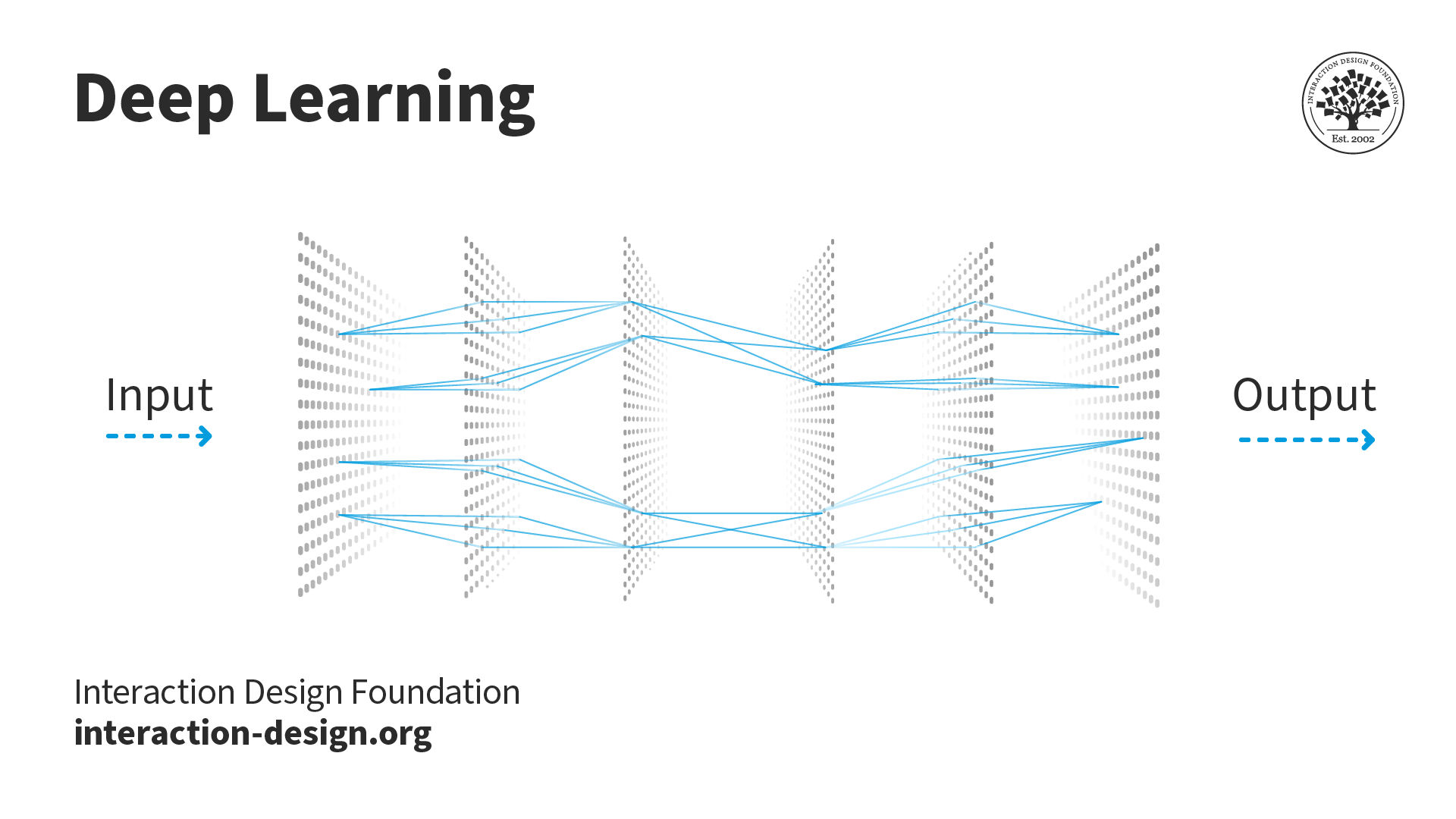
Neural networks for deep learning have several hidden layers between input and output at the extremities. This is the origin of the term "deep".

© Interaction Design Foundation, CC BY-SA 4.0

Neural networks consist of interconnected artificial neurons similar in structure to the human brain. Deep learning uses layers of these networks to discover patterns in data and make decisions based on them. Unlike earlier forms of machine learning, pattern discovery in neural networks is learned rather than programmed. This can lead to the unfortunate consequence that it is not always clear how predictions have been derived.

Deep Learning vs Machine Learning

Although deep learning is a form of machine learning, there are some important differences.

Deep learning…

  • Is trained using large amounts of data.

  • Makes use of feedback in the environment, including past mistakes.

  • Works with unstructured data, for example, images, text and audio.

  • Can discover complex, non-linear relationships in the data.

  • Needs large numbers of GPUs (graphics processing units) that specialize in parallel processing.

Machine learning …

  • Can work with smaller data sets.

  • Requires more human intervention to correct and improve the algorithms.

  • Often needs additional pre- and post-processing to handle unstructured data.

  • Is more simplistic in terms of the relationships it can discover in the data.

  • Does not rely on parallel processing so can be trained with conventional CPUs (central processing units).

History of Deep Learning

The concept of artificial neurons, which are fundamental to deep learning, was first proposed in the 1940s by McCulloch and Pitts (see the illustration below). However, deep learning itself did not get much attention until later in the 20th century, when some breakthroughs were made in…

  • Recurrent neural networks: A type of network that uses the output of one pass as the input to the next, making them recursive or recurrent. This approach is important in language processing since the meaning of a sentence is dependent on the sequence of words.

  • Convolutional neural networks: A system for feature recognition loosely based on the visual processing of the human brain.

  • Backpropagation: Adjusting the weights in a neural network based on the error rate of the previous pass.

In the early 21st century, advances in speech, language and image processing made deep learning possible. The availability of large datasets also contributed to the training of neural networks which underpin deep learning algorithms. More recently, advances in parallel processing, in the form of Graphical Processing Units (GPUs), significantly reduced the time taken for training neural networks on very large datasets. Originally, these would have been the same GPUs found in gaming cards, but versions specialized for neural networks have since been developed.
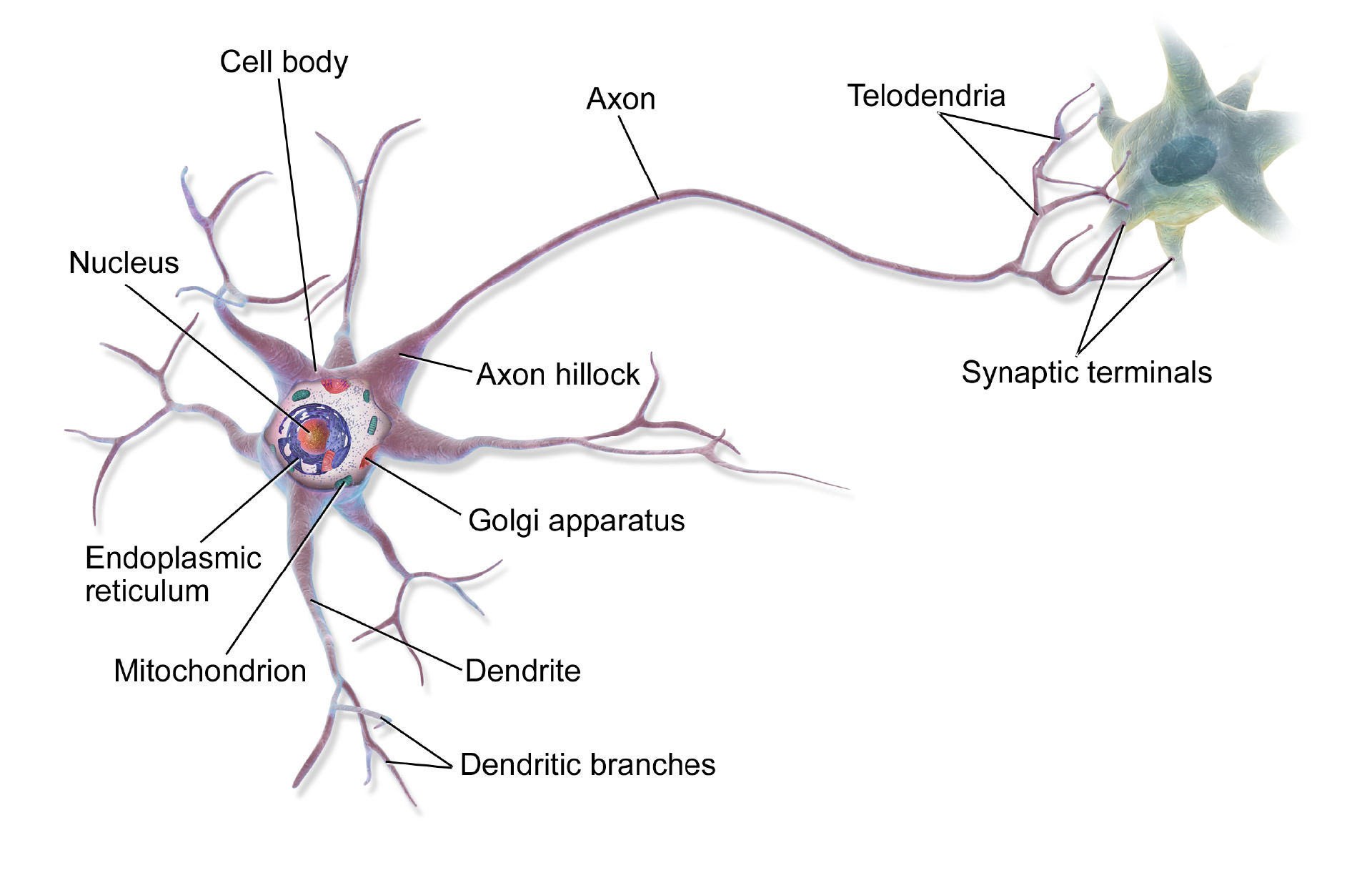
Diagram of a human neuron. Signals are received through the dendrites (left) and sent out through the axon (right).

CC BY-SA 4.0 ShareAlike (https://creativecommons.org/licenses/by-sa/4.0/)

A graphic representation of the McCulloch-Pitts neuron. Signals are received by g (left). f (right) makes a decision whether to provide an output. All signals are binary (either 0 or 1).

© Interaction Design Foundation, CC BY-SA 4.0

Deep learning is now receiving significant attention, with applications in many fields. It is constantly improving and is making substantial contributions to artificial intelligence generally, as described below.

Applications of Deep Learning

Chatbots

Using neural networks, chatbots can convincingly mimic human conversation. In February 2024, researchers established that some were indistinguishable from humans by passing the Turing test. (The test was devised by Alan Turing in 1950 to measure the "intelligence" of machines.)

Chatbots can learn from interactions with people or from other sources, such as the vast body of conversations found on the World Wide Web. They can understand natural language and produce meaningful responses. Modern deep-learning chatbots are very sophisticated and can process complex questions and instructions. They learn from interactions over time and improve themselves when made aware of mistakes.
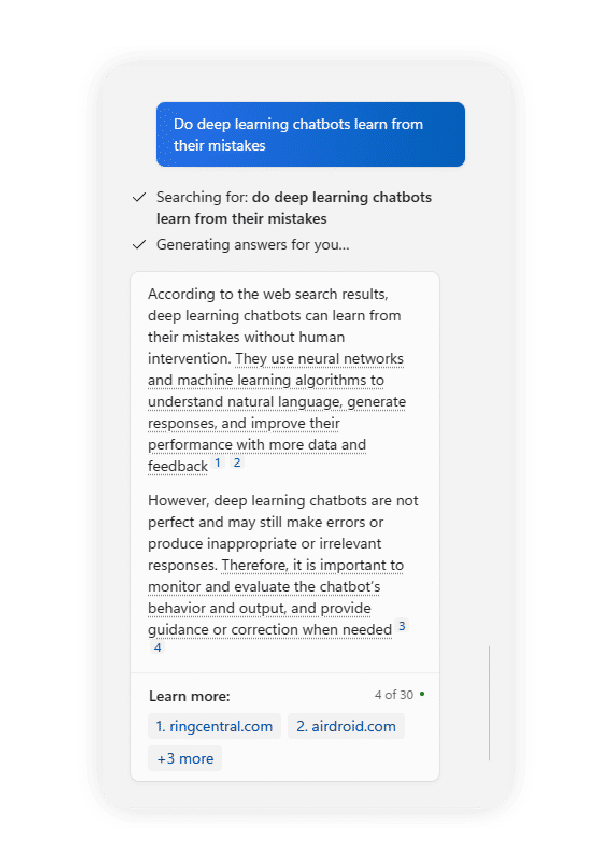
A chatbot explaining how they learn.

Microsoft Copilot, Fair Use

Virtual Assistants

Amazon Echo Dot with Alexa virtual assistant.

Virtual assistants (VAs) like Alexa, Google Assistant and Siri increasingly use deep learning to perform complex tasks. These include understanding spoken language, generating responses and learning from user feedback. Some related applications, such as Google Lens, use deep learning for image processing and object recognition. We are likely to see similar features built into virtual assistants as the technology improves.

Self-Driving Cars

Self-driving cars use deep learning.

In many respects, self-driving cars act as virtual assistants (see above) but require additional capabilities to deal with the complexities of driving itself:

  • Computer vision: Deep learning enables self-driving cars to analyze images and videos and provide relevant information or actions based on them. For example, modern cars process road signs to establish speed limits. Self-driving cars go further, using deep learning algorithms to identify important objects such as pedestrians and other vehicles.

  • End-to-end learning: Self-driving cars use deep learning to enhance their understanding of the environment by taking advantage of raw sensor data, such as camera images. Otherwise, they would need to rely on pre-programmed features or extra stages of processing.


Questions About Deep Learning?
We've Got Answers!

What is deep learning AI?

Deep learning AI is a type of artificial intelligence that uses artificial neural networks to learn from data and perform tasks that require human-like intelligence, such as image recognition, natural language processing, and speech recognition.

What is deep learning?

Deep learning is a subset of machine learning that uses neural networks with multiple layers to analyze complex patterns and relationships in data. It is inspired by the structure and function of the human brain and has been successful in a variety of tasks, such as computer vision, natural language processing, and speech recognition.

How does deep learning work?

In deep learning, a computer model learns to perform classification tasks directly from images, text, or sound. Deep learning models can achieve state-of-the-art accuracy, sometimes exceeding human-level performance. Models are trained by using a large set of labeled data and neural network architectures that contain many layers.

How is deep learning different from machine learning?

Deep learning differs from machine learning in the type of data that it works with and the methods that it uses to learn. Machine learning algorithms leverage structured, labeled data to make predictions, while deep learning algorithms can ingest and process unstructured data, such as text and images, and automate feature extraction. Machine learning algorithms typically require more human intervention to correct and learn, while deep learning algorithms can learn independently from the environment and past mistakes.

Does ChatGPT use deep learning?

Yes, ChatGPT uses deep learning to generate human-like text. It uses the transformer architecture, a type of neural network that has been successful in various natural language processing tasks and is trained on a massive corpus of text data from the internet.

What is deep learning used for?

Deep learning is used for many applications that require human-like intelligence, such as image recognition, natural language processing, speech recognition, sentiment analysis, recommendation systems, self-driving cars, fraud detection, medical diagnosis, and many more.

What does batch size mean in deep learning?

Batch size is a hyperparameter that defines the number of samples used in one iteration of training a deep learning model. The choice of batch size can have a significant impact on the performance of the model, such as its accuracy, speed, memory usage, and generalization ability.

What is transfer learning in deep learning?

Transfer learning is a technique in which a model trained on one task is used as a starting point for training a model on a different but related task. It applies the weights of the learned features to the new model. The pre-trained model serves as transferred knowledge to be applied in another domain.

Where is deep learning used?

Deep learning is used in various domains and industries that require intelligent solutions, such as healthcare, finance, retail, transportation, education, entertainment, security, agriculture, manufacturing, and many more.

What is the difference between deep learning and neural networks?

Deep learning can handle more complex and unstructured data, such as images, text, and speech, and automate feature extraction. Neural networks are algorithms that mimic the way the biological neurons in the human brain work. Neural networks are simpler and more limited in their capabilities, while deep learning models are more complex and can handle more complex data sets.

Earn a Gift Earn a Gift, Answer a Short Quiz!

1
2
3
4
1
2
3
4
Question 1
Question 2
Question 3
Get Your Gift
Interaction Design Foundation logo

Question 1

What distinguishes deep learning from traditional machine learning?

1 point towards your gift

  • Deep learning models learn through multiple layers to recognize complex patterns.
  • Deep learning models need less computational power than machine learning.
  • Deep learning models require more data for training.
Interaction Design Foundation logo

Question 2

What challenge do designers face when training deep learning models?

1 point towards your gift

  • To find enough labeled data for effective training
  • To lower the network's computational requirements
  • To maintain lower memory usage for the models
Interaction Design Foundation logo

Question 3

How has deep learning revolutionized image and video analysis?

1 point towards your gift

  • It allows models to identify subtle and complex patterns in visual data.
  • It simplifies the training process for neural networks and meta data.
  • It requires less data for accurate classification.

Learn More About Deep Learning

Make learning as easy as watching Netflix: Learn more about Deep Learning by taking the online IxDF Course AI for Designers.

Why? Because design skills make you valuable. In any job. Any industry.

In This Course, You'll

  • Get excited about how quickly you can create meaningful results when you turn AI into your new superpower and combine it with timeless human-centered design skills. As an AI-powered designer, you’ll increase your efficiency and salary potential, and as a human-centered leader, you'll create ethical AI-powered products people love. When these abilities come together, you’ll solve real-world problems faster and make the world a better place. Studies show that AI-driven productivity accelerates growth and helps busy professionals like you achieve in months what once took decades. Now's the time to master the powerful combination that keeps you in demand.

  • Make yourself invaluable when you use AI to accelerate repetitive tasks while applying your irreplaceable human strengths like empathy, critical thinking, and ethical decision-making to guide every solution toward what users truly need. Leaders seek professionals with AI fluency because the people who thrive combine AI efficiency with deep human insight that machines can't replicate. You'll learn to automate and streamline repetitive tasks, make data-driven decisions, and optimize your workflow for innovation and cost savings. No matter your background, you'll easily master AI for Designers. With clear guidance and real-world examples, you'll apply your skills immediately.

  • Gain confidence and credibility as you master the art of text prompts for design. You'll learn how to deal with bias in AI and how to use AI tools to create intuitive user experiences that drive business success. You can fast-track your portfolio of AI-enhanced case studies with step-by-step guidance, practical tips for real-life projects, and downloadable templates. This course gives you the hands-on knowledge to guide AI with timeless human-centered design skills, and that's how you stay in demand in any industry!

It's Easy to Fast-Track Your Career with the World's Best Experts

Master complex skills effortlessly with proven best practices and toolkits directly from the world's top design experts. Meet your experts for this course:

  • Ioana Teleanu: Founder of UX Goodies and former Lead Product Designer (AI) at Miro.

  • Rafael Hernandez: Lead Product Designer at T. Rowe Price.

  • Jarvis Moore: Senior Design Lead, Design Systems at Microsoft.

  • Niwal Sheikh: Product Design Lead at Netflix.

  • Vitaly Friedman: Senior UX Consultant for the European Parliament, and Creative Lead, Smashing Magazine.

  • Pablo Stanley: Designer and CEO of Musho and Lummi.

Get an Industry-Recognized IxDF Course Certificate

Increase your credibility, salary potential and job opportunities by showing credible evidence of your skills.

IxDF Course Certificates set the industry gold standard. Add them to your LinkedIn profile, resumé, and job applications.

Course Certificate Example

Be in distinguished company, alongside industry leaders who train their teams with the IxDF and trust IxDF Course Certificates.

Our clients: IBM, HP, Adobe, GE, Accenture, Allianz, Phillips, Deezer, Capgemin, Mcafee, SAP, Telenor, Cigna, British Parliament, State of New York

All Free IxDF Articles on Deep Learning

Read full article
Natural User Interfaces – What does it mean & how to design user interfaces that feel naturaly - Article hero image
Interaction Design Foundation logo

Natural User Interfaces – What does it mean & how to design user interfaces that feel naturaly

User interfaces that you interact with using modalities such as touch, gestures or voice are often referred to as Natural User Interfaces (NUI). We consider them interfaces that we find so easy to use that they feel natural. However, what does it mean for an interface to be natural? Also, how do you

Social shares
1k
Published
Read Article
Read full article
Why Is AI so Important and How Is It Changing the World? - Article hero image
Interaction Design Foundation logo

Why Is AI so Important and How Is It Changing the World?

You've heard about AI and all the wonderful (and sometimes scary) possibilities. But unlike sci-fi apocalyptic movies, AI isn't out to destroy humanity. Let's take a look at the challenges and opportunities we face as AI meets design.In this video, Ioana Teleanu, Founder of UX Goodies and former Lea

Social shares
444
Published
Read Article

Why Is AI so Important and How Is It Changing the World?

Why Is AI so Important and How Is It Changing the World?

You've heard about AI and all the wonderful (and sometimes scary) possibilities. But unlike sci-fi apocalyptic movies, AI isn't out to destroy humanity. Let's take a look at the challenges and opportunities we face as AI meets design.

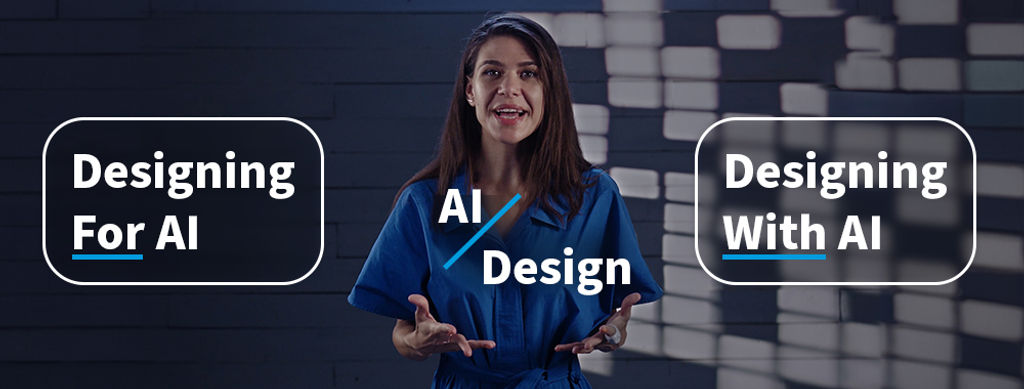
In this video, Ioana Teleanu, Founder of UX Goodies and former Lead Product Designer (AI) at Miro, talks about the impact of AI on design from two perspectives: “Designing for AI” products and “Designing with AI”.

Transcript

How AI is Changing the World

AI is already reshaping our world, from its profound influence on healthcare and education to its transformative impact on transportation and agriculture:

  • Chatbots are commonplace, AI-generated art is everywhere, and prompt engineering is now an essential skill.

  • Stanford's AI Index Report shows AI adoption jumped from 55% of organizations in 2024 to 78% in 2025.

  • A report by PwC says that people with advanced AI skills earned a 56% wage premium compared to those without (based on nearly 1 billion job ads).

In this video, we'll navigate the intricate terrain of AI's far-reaching effects, and explore the concerns it raises and its remarkable potential across diverse domains.

Transcript

The Take Away

In AI and design, we have two core aspects: "Designing for AI" and "Designing with AI".

  • "Designing for AI" means that we incorporate AI into the solutions that we design. Don’t think of products based on detailed commands; rather, express goals and let AI work out the steps. This changes the way we think about products and solutions.

  • "Designing with AI" means that we can incorporate AI into our design process. We can think of it as a partner and collaborator.  We can use AI as an exoskeleton and augment our capabilities.

AI brings both concerns and undeniable benefits. While some express worries about its rapid development, AI also holds immense potential. It can revolutionize healthcare, education, environmental sustainability, transportation, and productivity. Historically, such technological shifts have raised concerns, but they've ultimately led to new opportunities and societal changes. Thus, it's crucial to approach AI with a balanced perspective and recognize its dual nature.

References and Where to Learn More

Watch our 1-hour Master Class with Rafael Hernandez, Lead Product Designer at T. Rowe Price, and discover how to Get Ahead in Product Design with AI.

Explore our comprehensive article on Artificial Intelligence for a complete overview of AI in design, along with additional resources.

Find out how to get an AI efficiency boost as you build your design portfolio in our article, Create a Winning UX/UI Portfolio: Optimize with AI.

Hero image: © Interaction Design Foundation, CC BY-SA 4.0

Feel Stuck?
Want Better Job Options?

AI is replacing jobs everywhere, yet design jobs are booming with a projected 45% job growth. With design skills, you can create products and services people love. More love means more impact and greater salary potential.

At IxDF, we help you from your first course to your next job, all in one place.

See How Design Skills Turn Into Job Options
Privacy Settings
By using this site, you accept our Cookie Policy and Terms of Use.
Customize
Accept all

Be the One Who Inspires

People remember who shares great ideas.

Share on:

Academic Credibility — On Autopilot

Don't waste time googling citation formats. Just copy, paste and look legit in seconds.