The four principles of human-centered design, including people-centered, solve the right problem, everything is a system and small and simple interventions.

The Future of Design—What’s Next?

by Laia Tremosa • 23 min read

681 Shares

The design profession is evolving, and it’s up to designers to shape their future. Traditional design was focused on aesthetics, the visual appeal. Up until the 20th century, generally designers were not included in strategic decisions; they were thought of as simply producers, as craftspeople. Now, in the 21st century, designers have the opportunity to take a seat at the table, influence business decisions and even tackle complex societal challenges. So, if you want to make an impact—and a big, far-reaching one at that—you might find there’s never been a better time to be a designer.

Design is shifting in terms of what designers do and also in terms of what they work on. Besides delivering great products and experiences, design is starting to be considered as a way of thinking which can not only drive business success but also be used to solve complex human issues.

From User-Centered Design to Humanity-Centered Design 

Humanity-centered design is a practice where designers focus on people’s needs, not as individuals, but as societies with complex, deep-rooted problems. Designers can co-create proper solutions when they work with populations, address the right problems, perform systems analyses and co-design small, simple interventions.

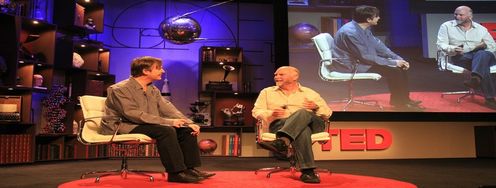
In this video, Don Norman: Father of User Experience design, author of the legendary book The Design of Everyday Things, co-founder of the Nielsen Norman Group, and former VP of the Advanced Technology Group at Apple, explains the impact of humanity-centered design.


Transcript

You can apply the principles of HCD to any complex problem in the world, be it related to politics, economics, education or a host of others.

What Makes Designers Special? 

Traditionally, the approach to solving society's biggest challenges has been to call in the experts. There is a fundamental problem with this approach, though, and that’s because it tends to forget—or limit the importance of—people, cultures and the environment. 

In this video, Don Norman describes how designers can tackle humanity's biggest challenges—by actively involving people, instead of acting like an “expert”.


Transcript

Design is about solving the right problems, a.k.a. the root problems. Therefore, designers can collaborate with people who are already working on these challenges and help them frame them so that they can tackle the underlying cause, or causes, and not the symptoms. In addition, design is a field of doing and, as such, it can help transform theoretical approaches into practical actions that have a tangible impact.

How Can Designers Have a Greater Impact?

As a designer, whether you want to move up in a company or tackle complex societal issues, you need to look at the big picture. If you learn the fundamentals of finance, accounting, marketing, supply chain, psychology and administration, you’ll gain a far greater understanding of how companies work or how society works and then you’ll be able to develop strategic thinking and put yourself in a position to take your seat at the table.

In this video, Don Norman talks about how thinking in systems can help you progress in your career and have a greater impact on companies, society and the world.

Transcript
 

The Power of Being Generalists 

Typically, designers learn a broad range of skills and work on many different types of projects. While the power of specialists is their deep, narrow knowledge, your power as a designer—a generalist to a certain extent—is in your ability to talk to many specialists and to bring them together to create a final product or solution. 

The ability to facilitate successful collaboration can become the difference between a successful initiative and a failed one. No specialist can solve a complex societal problem alone. Therefore, collaboration is essential to move forward as a society. As a designer, you have the capacity to bring different disciplines together, keep the people at the center of the project, innovate and deliver tangible results. 

Design Education Must Change 

The design profession is changing, and design education needs to change accordingly. Traditionally, design programs focus on the craft aspect of design. While still relevant, there are many other cross-disciplinary skills that designers need to learn to be able to move from being producers and craftspeople to strategists and visionaries. Therefore, when choosing your design education, make sure to keep a critical eye on what is offered, what related disciplines are taught and find the right fit for you. Although there is no one-size-fits-all design education, make sure that whatever program you choose includes some type of collaboration with people from other disciplines. 

In this video, Don Norman explains how including cross-disciplinary collaboration as a core element of design education can significantly improve its quality and impact, and better prepare designers for the real world.


Transcript

If you’d like to further your career as a designer, and tackle complex societal issues, you might need to learn differently. If you are a student in a design program, make sure you complement your education by taking classes or courses in disciplines such as business, engineering, economics or psychology. If you’re a seasoned designer, consider learning cross-disciplinary skills by collaborating with different departments or organizations and taking up courses to expand your knowledge about related fields. 

The Take Away

Design as a profession is evolving, and it’s up to you to take the reins and decide what role you want to have in this process. You have the potential to better the lives of people across the planet; from improving people’s daily lives by making products easier to use, to tackling society’s biggest challenges. As a designer, you know how to identify and define the root problem and deliver tangible solutions. And most importantly, you already know that you don’t have all the answers but you have the skills to look for and uncover them by collaborating with people across disciplines as well as the people for whom you are designing.

Whether you’d like to move up in your career or have a greater impact in the world, leverage your skills, think in systems, collaborate with different fields and always keep learning. This approach will give you the power to steer your career path toward where you want to go and will even give you the opportunity to shape the future of design.

Where to Learn More

Ready to shape the future, not just watch it happen? Join the Father of UX Design, Don Norman, in his two courses, Design for the 21st Century and Design for a Better World, and turn your care for people and the planet into design skills that elevate your impact, your confidence, and your career.

Learn More in This Course:

Design for the 21st Century with Don Norman

6 days
54 % booked
View Course

What You Should Read Next

  • Read full article
    How to Change Your Career from Graphic Design to UX Design - Article hero image
    Interaction Design Foundation logo

    How to Change Your Career from Graphic Design to UX Design

    If there’s an occupation that is 100% linked with the public’s idea of what design is all about, it’s graphic design. From the familiar golden arches of the McDonald’s brand to the typography and colors of movie posters, graphic designers create some of the most iconic and ubiquitous designs around

    Social shares
    1.4k
    Published
    Read Article
  • Read full article
    How to Change Your Career from Marketing to UX Design - Article hero image
    Interaction Design Foundation logo

    How to Change Your Career from Marketing to UX Design

    There are a few good reasons why you might want to change your career from marketing to UX design. First, there’s the pay—sources like UXDesignerSalaries(1) show that UX designers are paid a fairly handsome salary across the world (even as high as $97k in Switzerland). Furthermore, according to recu

    Social shares
    1.1k
    Published
    Read Article
  • Read full article
    How to Change Your Career from Web Design to UX Design - Article hero image
    Interaction Design Foundation logo

    How to Change Your Career from Web Design to UX Design

    Changing careers isn’t as hard as it’s often made out to be, especially if you’ve got the right resources to help you make the change. For many web designers, now is the perfect time to make the switch into UX design. To start with, there’s the monetary boost that comes with the change in career. Ac

    Social shares
    1.1k
    Published
    Read Article
  • Read full article
    Google UX Design vs IxDF Membership: Which UX Certification Is Right For You? - Article hero image
    Interaction Design Foundation logo

    Google UX Design vs IxDF Membership: Which UX Certification Is Right For You?

    You’ve decided to take a step towards a new, exciting career in UX design—congratulations! We know that starting along this journey can be difficult; where do you begin? Well, we can help you there! Let’s take a look at the two most popular options for an online UX design education: 1) The Google UX

    Social shares
    1.1k
    Published
    Read Article
  • Read full article
    5 Awesome TED Talks for Designers - Article hero image
    Interaction Design Foundation logo

    5 Awesome TED Talks for Designers

    We know, TED talks can sometimes feel a little… overblown. While there are loads of great talks; some of them go nowhere and don’t seem to add much to your life at all. To make things worse… there are a lot of TED talks and it’s hard to tell which are going to motivate you to do something new and in

    Social shares
    979
    Published
    Read Article
  • Read full article
    Do I Need a Degree to Work In User Experience? - Article hero image
    Interaction Design Foundation logo

    Do I Need a Degree to Work In User Experience?

    This is a question that, in slightly different forms, gets asked a lot by those considering a UX design career. The question is a simple one but the answer..? Well, that’s a bit more complicated. A lot depends on you and your approach to life and your career. So let’s take a look at the benefits of

    Social shares
    952
    Published
    Read Article
  • Read full article
    How to Build a UX/UI Design PDF Portfolio That Hiring Managers Will Love (Includes Examples) - Article hero image
    Interaction Design Foundation logo

    How to Build a UX/UI Design PDF Portfolio That Hiring Managers Will Love (Includes Examples)

    If you already have an online UX/UI design portfolio, do you need a PDF version? The answer is – yes; it is better to be safe than sorry! Some hiring managers like to see a more detailed PDF portfolio after reviewing your online portfolio, while some job applications may request an upload instead of

    Social shares
    943
    Published
    Read Article
  • Read full article
    UI & UX Designer Salaries: How Much Can I Earn in 2026? - Article hero image
    Interaction Design Foundation logo

    UI & UX Designer Salaries: How Much Can I Earn in 2026?

    How much can you earn as a UI or UX designer in 2026? The truth is that there's no single answer. Your earning potential depends less on averages and more on factors you can actually control. Designers using AI to accelerate execution while bringing strategic thinking, user empathy, and measurable b

    Social shares
    943
    Published
    Read Article
  • Read full article
    What Should a UX Design Portfolio Contain? - Article hero image
    Interaction Design Foundation logo

    What Should a UX Design Portfolio Contain?

    Your UX design portfolio is the key that gets you a job interview, and it is therefore vital that you include everything necessary in it. After all, a recruiter spends only a few minutes to form an opinion of you through your portfolio. If you’re new to UX, however, you might not know what exactly n

    Social shares
    825
    Published
    Read Article
  • Read full article
    The Design Career Map – Learn How to Get Ahead in Your Work - Article hero image
    Interaction Design Foundation logo

    The Design Career Map – Learn How to Get Ahead in Your Work

    Most people put a lot of effort into their work. Unfortunately, they often neglect themselves in the process. Time served is no longer enough to progress your career (if it ever was). You need to consciously develop your personal and professional skills to succeed and you need a plan to get from whe

    Social shares
    823
    Published
    Read Article

Top Articles

Top Topic Definitions

Feel Stuck?
Want Better Job Options?

AI is replacing jobs everywhere, yet design jobs are booming with a projected 45% job growth. With design skills, you can create products and services people love. More love means more impact and greater salary potential.

At IxDF, we help you from your first course to your next job, all in one place.

See How Design Skills Turn Into Job Options
Privacy Settings
By using this site, you accept our Cookie Policy and Terms of Use.
Customize
Accept all

Be the One Who Inspires

People remember who shares great ideas.

Share on:

Academic Credibility — On Autopilot

Don't waste time googling citation formats. Just copy, paste and look legit in seconds.

Feel Stuck? Want Freedom?

Get one powerful email each week, like 326,171 others.

Learn to design a life you love.

Next email in
6
days
19
hrs
43
mins
50
secs