Market Ecology and Product Adoption and Continued Use

• 8 min read

484 Shares

Products do not exist in isolated universes by themselves. Just as creatures in a biological system are affected by the environment; products form part of a greater eco-system in which they are affected by their environments.

Market ecology is the understanding that cultural, economic, political, social and technological environments impact on both the adoption and continued use of a product.

Cultural Environments

Don Norman, the renowned designer, writing for Core 77 in his article, “Does culture matter for product design?,” argues that culture is no longer particularly relevant to product design. That globalization of products has reduced the effective impact of most design decisions.

However, he also argues, in the same article, that this is a failure to capitalize properly on cultural environments and that the homogenization of design both diminishes culture and humanity and reduces the ability to maximize the benefits that design can play in a given role.

What is certainly true is that cultural environments do have an impact on whether a design will flourish in a given market or not. For example, while a set of four plates, bowls, cups, etc. may be perfect for a Western home (as it provides utensils for each member of the family) it would likely be rejected by Chinese consumers (in China four is an unlucky number which is associated with death).

Don Norman (pictured below) is correct that cultural environments are less important than they once were. Wherever you are on the planet people use products for similar reasons but this does not mean that the cultural environment can be ignored completely.

Designers will need to research potential cultural issues within any given market and try to avoid mistakes which will negatively impact adoption or ongoing success. They may also find potential enhancements within the cultural framework of a market too.

Author/Copyright holder: jordanfischer. Copyright terms and licence: CC BY 2.0

Economic Environments

Economic environments are extremely complex and may change in a heartbeat. Countries such as Greece have swung from economic prosperity to economic collapse in minutes.

Economies may exist with a market and they may exist outside of that market too. Commodity prices, for example, such as the price of oil are driven by a market for the product and there is an economic environment for oil. However, the sale of oil also depends on the economic health of customers and there is an external economic environment for oil too.

It is hard for designers to plan for economic swings but many designers make use of economic hardship to drive innovation. The $100 laptop, the $2,200 car, etc. are all products which have arisen to meet the needs of markets with depressed economic circumstances.

Political Environments

Political environments can be hard to predict; from a product designer’s perspective the most obvious impact on a market is the change of law or regulatory regimes. It is worth noting that a failure to consider the legal environment that currently exists may also be problematic for a product launch.

If you consider Segway, the two wheeled motorized vehicle (shown below), it is has encountered numerous market adoption problems due to the legal environment of nations not having a classification for Segway as a vehicle. This has resulted in much lower rates of adoption than the company had anticipated as Wired magazine revealed in their article; “Well, that didn’t work”.

While it may be possible for large companies to influence the political environment through lobbying; in most cases product designers should be aware of the political environment and any challenges it may present prior to developing products. It is unlikely that a small company will be able to withstand the kind of challenges that Uber, the taxi app company, has been able to fend off while dealing with regulatory systems around the world. According to Business Insider, Uber may yet find that even the deepest pockets can’t shape the regulatory infrastructure entirely in their favor.

Author/Copyright holder: ŠJů. Copyright terms and licence: CC BY 4.0

Social Environments

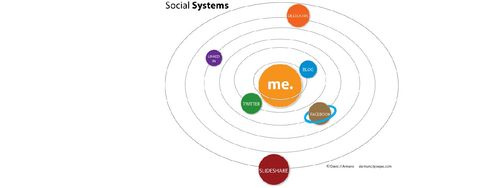
Social environments in the modern era take the form of the direct social network (friends, family, colleagues, etc.) and the indirect digital social networks that people are a part of.

Jeremiah Owyang, partner at the Altimeter Group says; “Social networks represent the digital reflection of what humans do: we connect and share.”

Designers and marketers can, to some extent, use digital social networks to drive product adoption. New Breed Marketing offer the example of General Electric tapping into social media using their “imagination at work” strategy. The company taps into the innovation of their audience to create experiences that are easy to adopt.

Technological Environments

Technology can change rapidly and a failure to adapt can leave products out in limbo. Kodak, the once great camera and film company, failed to adapt to the arrival of digital and their business model failed (ironically because Kodak developed the first digital camera). Nokia, the world’s leading handset brand, failed to come to terms effectively with the smartphone; the company refused to adopt the Android software platform and failed to develop a useful alternative. Today, Nokia no longer makes handsets.

You cannot design to prepare for unexpected technological disruption. However, you can amend your designs, in most cases, when such disruption occurs. Taking an “ostrich burying its head in the sand” approach, on the other hand, will inevitably lead to adoption failures and failures of existing products.
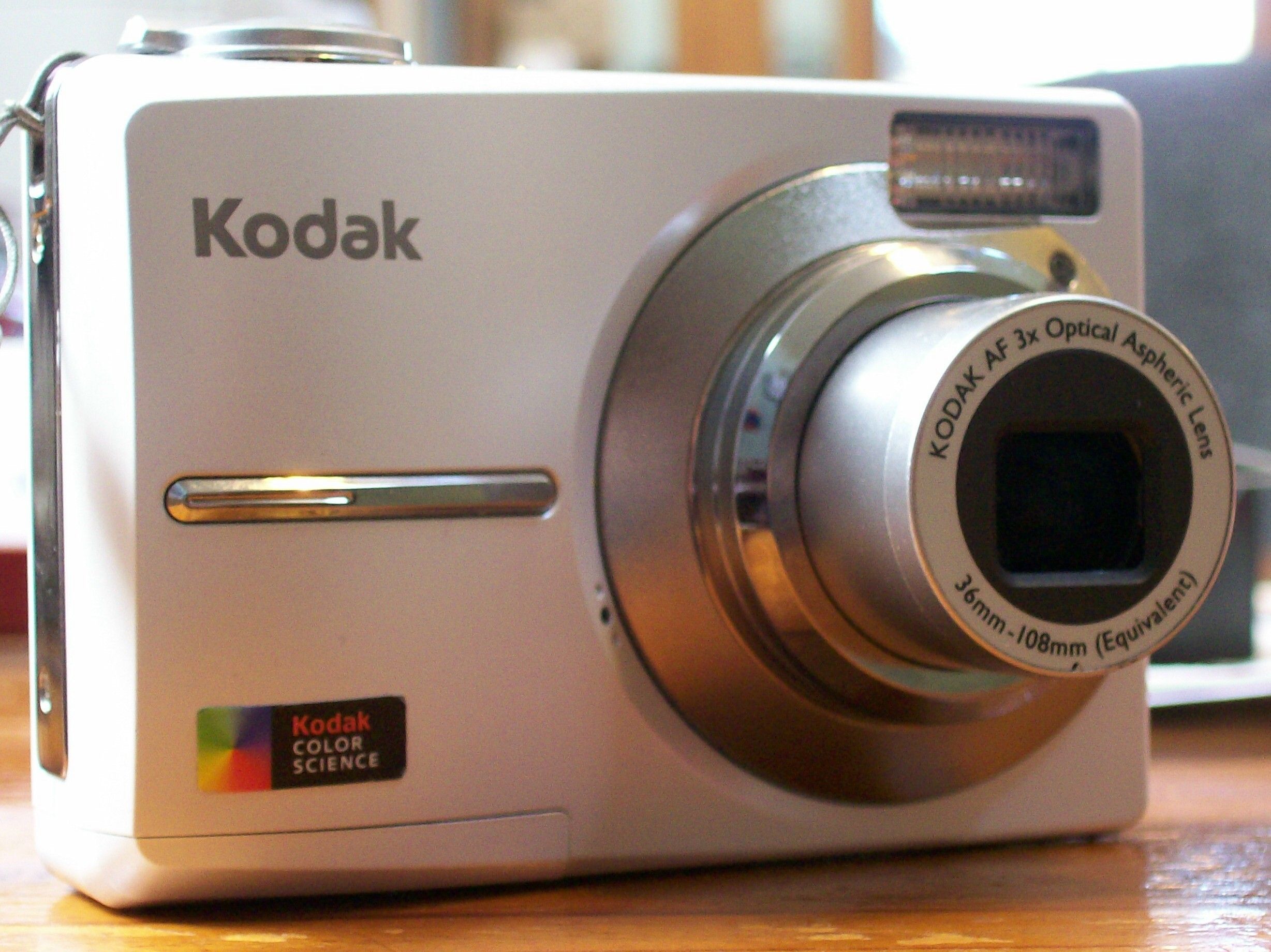
Author/Copyright holder: Jackelfive. Copyright terms and licence: Public Domain.

The Take Away

Market ecology is the understanding that products interact with their environments. That failing to account for those environments during product launch or iteration can prevent adoption of that product or destroy a successful product.

References

Don Norman’s “Does culture matter for product design?” can be found here.

The $100 laptop project is explained here.

The $2,200 car is explained here.

Wired’s examination of Segway’s failure “Well that didn’t work” can be found here.

Business Insider examines Uber’s regulatory challenges here.

New Breed Marketing examines successful social network campaigns here.

CNET explores the fall of Nokia here.

Forbes looks at the fall of Kodak here.

Hero Image: Author/Copyright holder: Thompsma. Copyright terms and licence: CC BY-SA 3.0

Learn More in This Course:

AI for Designers

10 days
16 % booked
View Course

What You Should Read Next

  • Read full article
    The Diffusion of Innovation – Strategies for Adoption of Products - Article hero image
    Interaction Design Foundation logo

    The Diffusion of Innovation – Strategies for Adoption of Products

    The diffusion of innovation is the process by which new products are adopted (or not) by their intended audiences. It allows designers and marketers to examine why it is that some inferior products are successful when some superior products are not.The idea of diffusion is not new; in fact it was or

    Social shares
    1.1k
    Published
    Read Article
  • Read full article
    How to Use the Product Life Cycle - Article hero image
    Interaction Design Foundation logo

    How to Use the Product Life Cycle

    The product life cycle is an important tool for marketers, management and designers alike. It specifies four individual stages of a product’s life and offers guidance for developing strategies to make the best use of those stages and promote the overall success of the product in the marketplace.Abou

    Social shares
    873
    Published
    Read Article
  • Read full article
    Useful, Usable, and Used: Why They Matter to Designers - Article hero image
    Interaction Design Foundation logo

    Useful, Usable, and Used: Why They Matter to Designers

    Today, we’re going to take a look at three contexts of the concept of use: useful, usable and used. The first two terms, useful and usable, are bandied around a lot in terms of user experience and design while the third term, used, barely gets a mention. Yet, as we’ll come to see it may be the most

    Social shares
    868
    Published
    Read Article
  • Read full article
    How to Achieve Critical Mass for a Product Launch - Article hero image
    Interaction Design Foundation logo

    How to Achieve Critical Mass for a Product Launch

    The concept of critical mass originates in physics; it refers to the volume of a nuclear product required to sustain a chain reaction in a nuclear explosion. However, critical mass in marketing requires a very different product – users – to ensure a “chain reaction” of sales. The idea of critical m

    Social shares
    754
    Published
    Read Article
  • Read full article
    Appropriation and Design: A Tale of Two Concepts - Article hero image
    Interaction Design Foundation logo

    Appropriation and Design: A Tale of Two Concepts

    ‘Appropriation is an unusual word for designers in that it has two very distinct meanings. Both are relevant to designers and both need careful consideration but for very different reasons.Appropriation is either:The use of pre-existing objects/images within a design or art with marginal amounts of

    Social shares
    704
    Published
    Read Article
  • Read full article
    Emotional Drivers for User and Consumer Behavior - Article hero image
    Interaction Design Foundation logo

    Emotional Drivers for User and Consumer Behavior

    In his paper; “Conditional Reflexes” the scientist Ivan Pavlov proved that a dog could be conditioned to respond to a stimulus. He presented a dog with food and the dog began to salivate. He also rang a bell every time he presented the food. Eventually he could ring the bell and cause the dog to sal

    Social shares
    688
    Published
    Read Article
  • Read full article
    Value Networks and Why They Matter - Article hero image
    Interaction Design Foundation logo

    Value Networks and Why They Matter

    We know, almost instinctively, that networks hold value. Human beings are by nature social creatures and our own social networks (not just those online) provide a framework for our behaviors and structure to our lives. Yet, the value of networks in business is often overlooked. Designers looking to

    Social shares
    686
    Published
    Read Article
  • Read full article
    Social Systems and Their Role in Product Adoption - Article hero image
    Interaction Design Foundation logo

    Social Systems and Their Role in Product Adoption

    People don’t often make their decisions by themselves with no input from others. We turn to family, friends, media, opinion makers, colleagues, etc. to get their input. This is particularly true of decisions which may impact on our happiness to a great extent.Why does this matter in a design context

    Social shares
    630
    Published
    Read Article
  • Read full article
    Adoption and Design: How to Turn Prospects into Users - Article hero image
    Interaction Design Foundation logo

    Adoption and Design: How to Turn Prospects into Users

    It doesn’t matter how amazing a product is; if no-one is using it, then it hasn’t succeeded. Adoption is the process of prospective users becoming actual users of a product. It is adoption that is the objective of design; more so than user experience, usability, utility, etc. History is full of prod

    Social shares
    590
    Published
    Read Article
  • Read full article
    Prospect Theory - The Economics of Design - Article hero image
    Interaction Design Foundation logo

    Prospect Theory - The Economics of Design

    Economists once assumed that every actor in an economic system would be rational. That people would calculate the value of what they had and what they could have in the future accurately and that they would make their decisions based on that calculation. Unfortunately, in practice this was rarely th

    Social shares
    581
    Published
    Read Article

Top Articles

Top Topic Definitions

Feel Stuck?
Want Better Job Options?

AI is replacing jobs everywhere, yet design jobs are booming with a projected 45% job growth. With design skills, you can create products and services people love. More love means more impact and greater salary potential.

At IxDF, we help you from your first course to your next job, all in one place.

See How Design Skills Turn Into Job Options
Privacy Settings
By using this site, you accept our Cookie Policy and Terms of Use.
Customize
Accept all

Be the One Who Inspires

People remember who shares great ideas.

Share on:

Academic Credibility — On Autopilot

Don't waste time googling citation formats. Just copy, paste and look legit in seconds.

Feel Stuck? Want Freedom?

Get one powerful email each week, like 326,171 others.

Learn to design a life you love.

Next email in
6
days
18
hrs
26
mins
29
secs