The exact history of the contextual interview in user research is a little murky. It was first alluded to in a paper by Whiteside, Bennet and Holtzblatt in 1988 which examined the use of qualitative research in design projects. However, the first complete description of the method was almost certainly proposed in 1990 by Wixon, Holtzblatt and Knox in 1990 though Holtzblatt and Beyer’s description in 1995 is considered to be the most complete.
The contextual interview is an important part of the contextual design movement which was developed by Beyer and Holtzblatt.
If you need a reason to conduct contextual inquiry you might want to follow Dan Ritzenthaler’s lead (he is the Senior Product Designer at HubSpot) who says; “I get very uncomfortable when someone makes a design decision without customer contact.”

Author/Copyright holder: Petar Milošević. Copyright terms and licence: CC BY-SA 3.0
By seeing what users do in context, it is easier to see how our products are really used. This is particularly important in age of mobile internet where context can be so varied.
The Four Principles of Contextual Inquiry
Contextual interviews are based on four guiding principles:
- Context – as you might expect, the interview must take place in the context of use. Typically this has been in a workplace or home environment but with the advent of mobile internet – contextual interviews may now take place in a wider range of settings and scenarios. The research observes the use of the product and talks to the user about what has happened in the observed session. They may also explore previous interactions which are not observed at the time.
- Partnership – there is a need for the user and researcher to form a collaborative partnership to understand what the user is doing and why. In general a contextual interview will shift from observing to discussing what happened in rapid shifts throughout the interview.
- Mutual interpretation – the researcher will explain their conclusions and interpretations with the user throughout the interview. The user is free to correct or expand on the researchers interpretations.
- Focus – the researcher must keep the interview focused on the topics which need to be explored to provide useful data for the improvement project’s scope. They may ask the user to perform specific tasks if they are to be examined specifically in the project brief.
Author/Copyright holder: D Coetzee . Copyright terms and licence: Public Domain.
“Mutual Interpretation” may sound complicated but really, it’s all about having an honest conversation to determine exactly what each person means.
Preparing for a Contextual Interview
The research team needs to adequately prepare for a contextual interview and determine what they will examine with the users and how this will be done.
This should be distilled into a research brief which the researcher can use throughout the contextual interview.
The user should also be prepared for the interview. In particular, it is important to reassure the user that they are not under the microscope and are not being tested but rather that the product is being tested with them carrying out the tests. It is important that the user is not made to feel pressured as this can result in users telling researchers what they think the researcher wants to hear rather than their own truthful experiences.
The Structure of a Contextual Interview
There are three phases to the contextual interview when it is carried out with the user:
- Introduction – this is the part of the interview where the interviewer and user establish trust and communication. The researcher will introduce themselves, the purpose of the research and any other relevant information. They may ask if the interview can be recorded and when recording should stop/start. They will usually offer assurances regarding confidentiality of the user’s data and permission to use the data anonymously as part of high-level overviews for the research’s findings. They may also establish what tasks will be carried out and how the format of the interview will take place.
- The Main Body – this is where the researcher focuses on their outline planning and observes the user working with the product. They discuss what is seen. Take notes and (if applicable) make recordings (video).
- The Wrap Up – this phase involves the research retelling their observations and conclusions to the user and allowing the user to have input into clearing up any misconceptions or to enlarge on important points.
The three phases of the interview do not need to be specifically identified by the researcher to the user and can flow naturally together.
For contextual research to yield the best results, you want to work with users who are actually carrying out the tasks you want to examine on a regular or semi-regular basis.
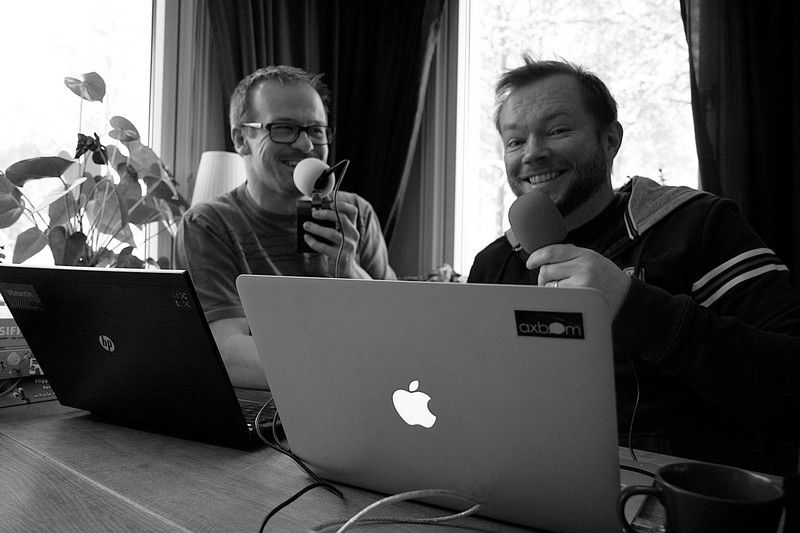
Author/Copyright holder: James Royal-Lawson. Copyright terms and licence: CC BY-SA 2.0
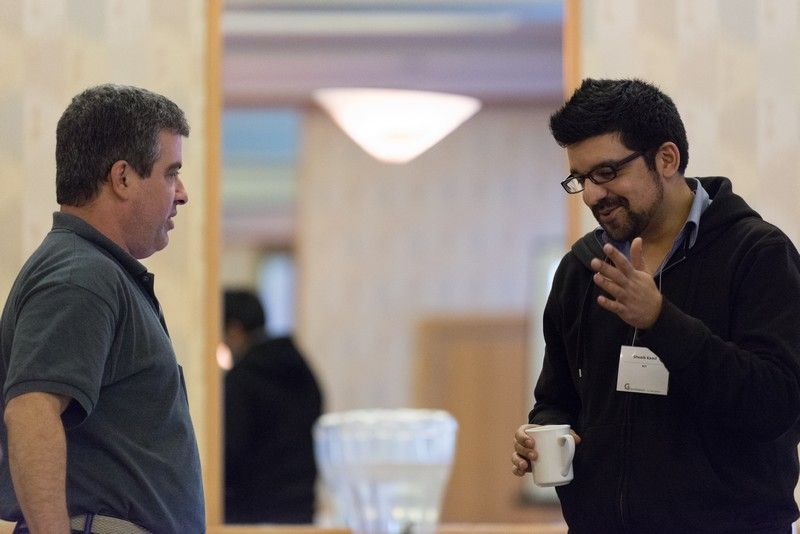
UX interviews aren’t tough to carry out. They’re done in the spirit of improving products. The best interviews are likely to be those in which the researcher and user gel personally and professionally.
The Advantages of Contextual Interviewing
There are good reasons to use contextual interviewing in your research including:
- The ability to reveal information and understanding that users might not be aware of
- The veracity of information – observing users in their natural environment tends to lead to very accurate information
- The detail of the information – this kind of study produces highly detailed information as opposed to many other qualitative methods which produce more high-level information
- The flexibility of the method – contextual research can be carried out wherever a user operates
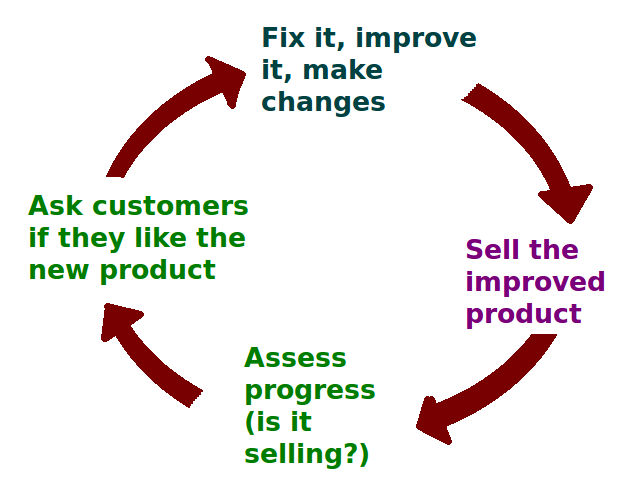
Author/Copyright holder: Tomwsulcer. Copyright terms and licence: Public Domain.
It should be pretty easy to see how contextual interviewing fits in with the larger scope of delivering customer satisfaction too.
The Drawbacks of Contextual Interviewing
There are also certain drawbacks to this kind of work including:
- Time and resource intensive. Visiting a user and conducting in depth observations takes more time than many other research methods and as such can be more costly too.
- It is a qualitative technique. Care must be taken when interpreting data from studies like this – it is often going to be true that you will not be able to afford to make this research “statistically significant” because of the effort required to run such a study. You may need to run other forms of research to determine the impact of issues identified in contextual research on the user population as a whole.
The Take Away
Contextual interviewing offers deep insight into how users actually use a product. It’s a very effective research technique which can be deployed at any stage of UX research. However, it’s important to understand the limitations of contextual interviewing before making any decisions based on the results of such research.
Resources
UX Matters explores why contextual inquiry can be challenging to deliver - http://www.uxmatters.com/mt/archives/2012/06/why-are-contextual-inquiries-so-difficult.php
Usability.gov explores the essentials of contextual interviewing here - http://www.usability.gov/how-to-and-tools/methods/contextual-interview.html
Hero Image: Author/Copyright holder: Victorgrigas. Copyright terms and licence: CC BY-SA 3.0